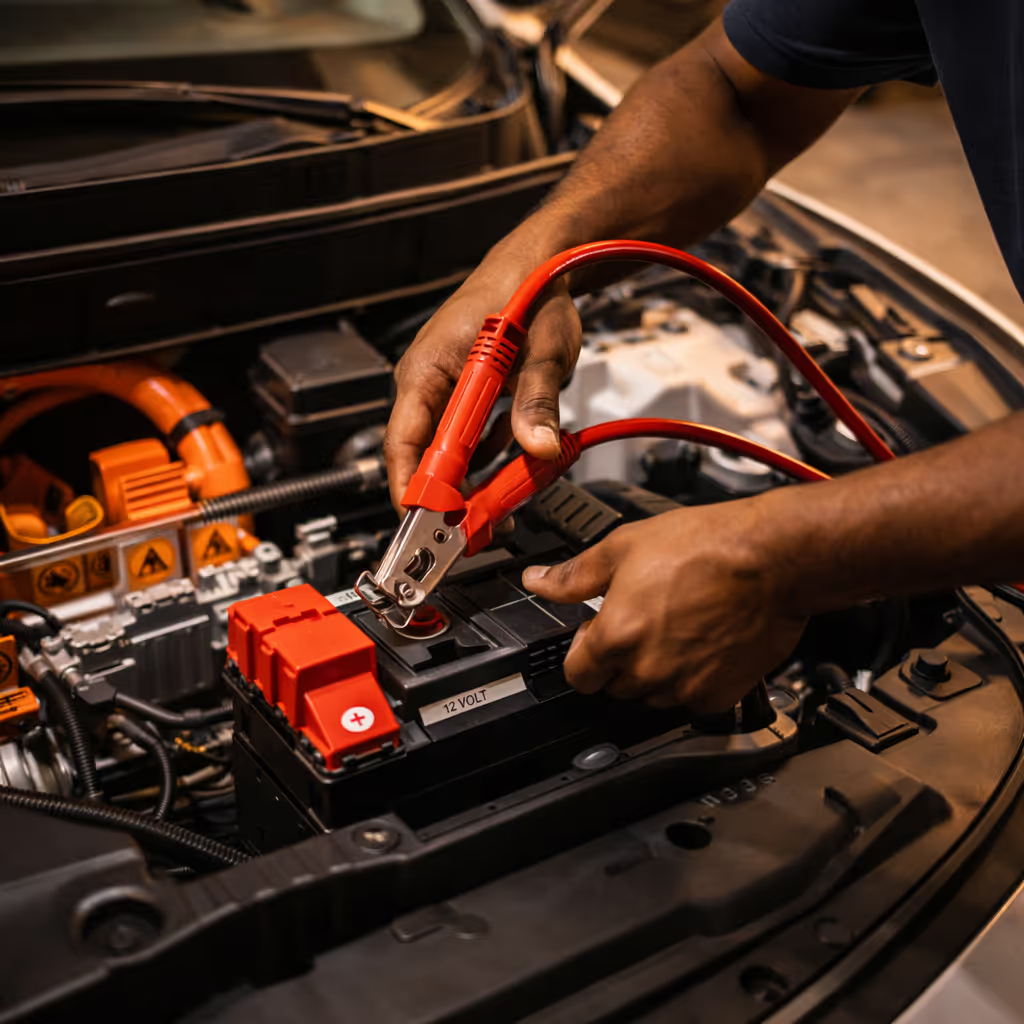
Hybrid and electric vehicles have two completely separate battery systems. One is the high-voltage traction battery that powers the electric motor. The other is a standard 12-volt auxiliary battery that handles the electronics, computer systems, and ignition sequence. Only one of these can be jump started. The other must never be touched with jumper cables under any circumstances.
This guide covers how to jump start a hybrid or EV safely, where the 12-volt battery is located across common models, the specific steps that differ from a conventional vehicle jump start, and the situations where a professional jump start service is the right call instead of a DIY attempt.
The single most important rule: only jump start the 12-volt auxiliary battery. Never connect jumper cables to the high-voltage traction battery or to any orange cable, connector, or component in the vehicle. The high-voltage system in a hybrid or EV runs at several hundred volts. Incorrect contact causes severe electrical damage, potential fire, and potentially fatal shock.
It is a common question: if a hybrid or EV has a large high-voltage battery pack, why does it also need a small 12-volt battery? The answer is sequencing.
How the two batteries work together: when you press the start button, the 12-volt battery is what wakes up the vehicle's computer systems, unlocks the contactors that connect the high-voltage battery to the drivetrain, and initiates the startup sequence. Without a functioning 12-volt battery, none of this happens. The high-voltage battery could be fully charged and the vehicle will not start. Once the 12-volt system is restored, the vehicle's DC-DC converter takes over and keeps the 12-volt battery charged from the main pack during operation.
| Factor | Hybrid vehicle | Full electric vehicle (EV) |
|---|---|---|
| Can it be jump started? | Yes, at the 12-volt battery or designated terminal | Yes, at the 12-volt auxiliary battery only |
| What battery to jump start | 12-volt auxiliary battery or manufacturer-designated jump terminal | 12-volt auxiliary battery only |
| Can another EV or hybrid jump start it? | Check owner's manual. Most allow conventional vehicle or jump pack only | No. Never use an EV or hybrid to jump start another EV |
| Can it be plugged in while jumping? | No. Disconnect all charging cables first | No. Never jump start while connected to any charger |
| What if it will not start after jump? | High-voltage battery may be depleted. Professional assessment needed | Main drive battery may be fully depleted. Tow to charging station or service |
| After jump, how long to run? | At least 30 minutes driving to allow DC-DC converter to recharge 12-volt | Drive to a charging station immediately to recharge main pack |
Battery location varies significantly by manufacturer and model. This is the most common source of confusion and the most important thing to confirm before connecting any cables.
Toyota Prius and RAV4 Hybrid
Designated jump-start terminals are located under the hood near the fuse box. The 12-volt battery itself is in the trunk or rear cargo area on most Prius models. Always use the under-hood jump terminals, not the rear battery directly.
Ford F-150 Lightning and Mustang Mach-E
Ford EVs have a 12-volt battery located under the hood with a clearly marked positive terminal. Ford's owner's manual specifies jump-start terminal location which may differ by trim. Consult the manual before connecting.
Tesla Model 3, Y, S, X
Tesla 12-volt battery location varies by model. Model 3 and Y have the 12-volt battery in the trunk area. Model S and X have it in the front trunk (frunk). Tesla specifies using a portable jump starter rather than another vehicle. Consult the Tesla owner's manual for exact jump terminal location.
Hyundai and Kia hybrids
Some Hyundai and Kia hybrid models use a lithium-ion polymer 12-volt battery rather than a traditional lead-acid 12-volt battery. These have a 12V Battery Reset feature in the vehicle menu. The jump procedure differs from standard lead-acid. Always check the owner's manual first.
Chevrolet Volt and Bolt
The Chevy Volt and Bolt have a 12-volt battery located under the hood with a dedicated positive jump terminal. GM provides jump-start instructions in the owner's manual with a designated negative ground point that is not the battery negative terminal.
All other models
If your hybrid or EV model is not listed here, consult the owner's manual before touching anything under the hood. Battery location, designated jump terminals, and specific instructions vary enough between manufacturers that guessing is not an acceptable approach.
Before you start:
Confirm the 12-volt battery or jump terminal location in your owner's manual. Identify all orange cables and components and stay completely away from them throughout the entire process.
Never touch any orange cable, connector, or component
Orange color coding on hybrid and EV wiring and components designates high-voltage systems. These run at several hundred volts. Contact causes severe shock, burns, or death. Identify all orange components before opening the hood and treat them as completely off limits regardless of how the situation develops.
Never use another EV or hybrid as the jumping vehicle
Attempting to jump start a dead EV or hybrid using another EV or hybrid as the power source can cause catastrophic damage to the electrical systems in both vehicles. Use only a conventional combustion-engine vehicle or a portable jump starter pack.
Never reverse the cable connections
Reversed polarity on a hybrid or EV is significantly more destructive than on a conventional vehicle. The sensitive electronics, battery management systems, and DC-DC converters in these vehicles can be instantly damaged or destroyed by a reversed connection. Double check polarity before connecting anything.
Never jump start while plugged into a charger
Attempting a jump start while the vehicle is connected to any charging source, home outlet, wall charger, or DC fast charger, can cause severe damage to the vehicle's electrical systems and poses a safety risk to anyone nearby. Disconnect all charging cables completely before beginning.
Never attempt to jump the high-voltage traction battery
There is no safe way to jump start the main drive battery with consumer equipment. Attempting this can cause rapid overheating, venting, fire, or explosion in addition to irreversible battery damage. The high-voltage battery can only be serviced and charged by certified technicians with specialized equipment.
Call for professional help rather than attempting a DIY jump in these situations: you cannot locate the 12-volt battery or jump terminal in the owner's manual or vehicle, the battery or any connected components show visible damage, corrosion, cracking, or leaking, the vehicle shows any warning lights related to the high-voltage battery system before the jump attempt, the vehicle is a Hyundai or Kia hybrid with a lithium-ion 12-volt system that requires a different procedure, or the vehicle still will not start after a correct jump attempt, which may indicate a depleted high-voltage pack rather than a 12-volt issue.
The 12-volt auxiliary battery in a hybrid or EV is not immune to Las Vegas heat. In fact it is more vulnerable than the main high-voltage pack in several specific ways.
Extreme heat degrades 12-volt batteries faster
Lead-acid 12-volt batteries degrade significantly faster in sustained heat above 100 degrees. Las Vegas summer temperatures accelerate the chemical breakdown inside the battery, shortening the expected lifespan from the national average of four to five years to as little as two to three years.
Parked EVs with accessories running drain the 12-volt
EV owners who leave the vehicle parked for extended periods with features like remote climate preconditioning, sentry mode, or connected apps actively running can drain the 12-volt battery even while the main pack remains charged. This is a common cause of EV no-start situations in Las Vegas casino and resort parking structures.
Short trips do not fully recharge the 12-volt
In hybrid vehicles, the 12-volt battery recharges via the DC-DC converter during driving. Very short trips in Las Vegas stop-and-go traffic may not provide enough run time to fully recover the 12-volt battery after a partial drain, gradually weakening it over time.
Can you jump start a hybrid car?
Yes. You can jump start the 12-volt auxiliary battery in a hybrid car using conventional jumper cables or a portable jump starter pack. The process is similar to a conventional vehicle with two critical differences: you must connect to the designated 12-volt terminal or jump point, not the high-voltage battery, and you must never use another EV or hybrid as the jumping vehicle. Consult your owner's manual for the exact terminal location before attempting.
Can you jump start an electric vehicle?
Yes, at the 12-volt auxiliary battery only. You cannot and should never attempt to jump start the main high-voltage drive battery. If the 12-volt battery is dead, jumping it will restore power to the vehicle's computer systems and allow the main battery to take over. If the main battery is also depleted, the vehicle will need to be towed to a charging station.
What happens if you accidentally jump start the wrong battery in a hybrid?
Connecting jumper cables to the high-voltage battery system in a hybrid can cause immediate and severe damage to the battery management system, wiring, and control modules. In worst-case scenarios it can cause rapid overheating, fire, or explosion. It also poses a fatal electrocution risk given the several-hundred-volt charge in the high-voltage system. If you are not certain which terminal you are connecting to, stop and call for professional help.
Can a hybrid car jump start a conventional car?
In most cases yes, a hybrid can use its 12-volt battery to jump start a conventional combustion-engine vehicle, with the same cable procedure used in reverse. However, check your specific hybrid owner's manual first as some manufacturers advise against using the hybrid as the jumping vehicle. Never use a hybrid to jump start an EV.
My hybrid jumped successfully but the battery died again the next day. What is wrong?
A 12-volt battery that requires repeated jumps or dies within a day of being jumped has likely reached the end of its service life and needs replacement. In Las Vegas heat, hybrid 12-volt batteries often fail earlier than the national average. The battery should be tested and replaced if necessary. Continuing to jump a failing battery rather than replacing it risks being stranded in a situation where a jump is not available.
Can Haulnado jump start a hybrid or EV in Las Vegas?
Yes. Haulnado jump start service covers Las Vegas, Henderson, and Boulder City for hybrid and EV vehicles. The 12-volt auxiliary battery jump follows the correct procedure for hybrid and EV vehicles. If the vehicle does not start after a correct jump, the situation may require a tow to a service facility or charging station, which can be discussed at the time of service. Request a quote with your vehicle make, model, and location.
Hybrid or EV not starting in Las Vegas?
Professional jump start service. Quote before dispatch.
Vehicle make, model, year, and your location. Las Vegas, Henderson, and Boulder City covered.
Request Jump Start Service Get a Quote NowFor more Las Vegas roadside tips, see the roadside tips guide collection. For flat tire help, see the flat tire guide. For out of gas situations, see the out of gas guide. For pricing details, visit the pricing page.
The Haulnado team


.svg)