You have something that needs to move. The question is whether it needs a courier or a freight carrier. They sound similar but they are built for completely different jobs, and choosing the wrong one costs time and money.
This guide explains the real difference between courier service and freight delivery, when each one is the right tool, and how to know which one fits your situation in Las Vegas, Henderson, and Boulder City.
The short answer: a courier handles local, direct, time-sensitive delivery without terminals or carrier networks. Freight handles large volume, long distance, and heavy loads that need infrastructure a van cannot provide.
A courier is a local delivery service. The driver picks up from one location and delivers directly to another, usually within the same city or metro area, on the same day. There is no sorting facility, no carrier terminal, no warehouse scan, and no shared route with dozens of other packages.
The defining characteristics of courier service are speed, directness, and communication. You know who has the item, where it is going, and when it will arrive. For time-sensitive local deliveries, that matters more than cost per pound.
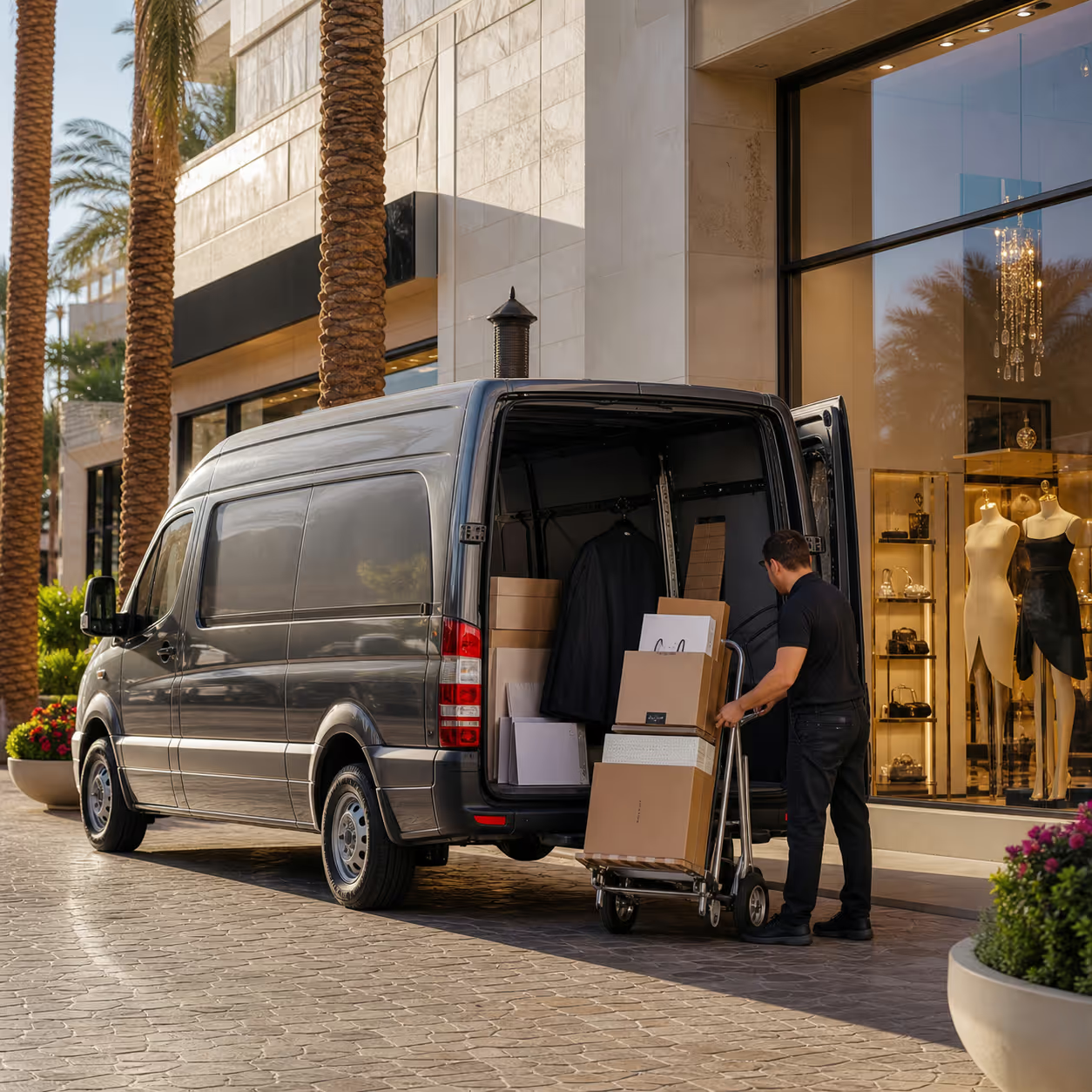
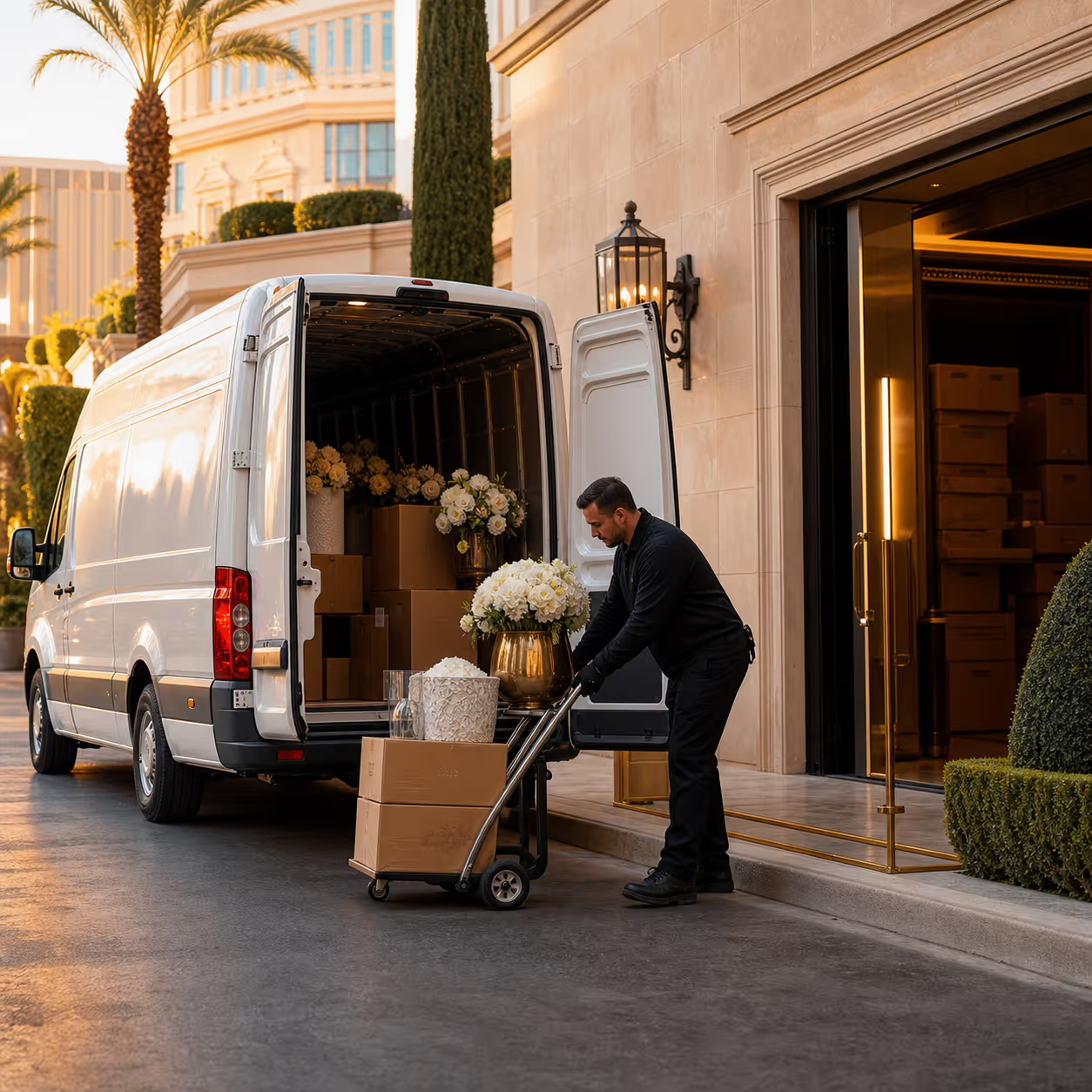
Couriers work best for businesses and individuals who need something moved across town today. Documents, auto parts, medical supplies, event materials, office inventory, and cargo van sized loads are all standard courier work. If it fits in a cargo van and needs to be there today, a courier is almost always the right answer.
Freight is a logistics infrastructure built for volume, distance, and weight. Freight carriers move large loads across states and regions using terminals, sorting hubs, and specialized equipment including flatbeds, semi-trucks, and forklifts. The tradeoff for that infrastructure is that individual shipments move on the carrier's timeline, not yours.
Freight makes sense when the load is too large for a van, the destination is out of state, the timeline is flexible, or the item needs a loading dock and pallet jack to handle. A warehouse moving a full truckload of product to a distribution center needs freight. A business sending three pallets of convention materials across Las Vegas does not.
Most businesses that think they need freight actually need a courier. The confusion usually comes from item size. A large item is not automatically a freight item. If it fits within cargo van dimensions and the destination is local, a courier handles it faster, cheaper, and with more direct communication than a freight carrier.
| Factor | Courier service | Freight carrier |
|---|---|---|
| Delivery speed | Same day, often within hours | 1 to 5 business days typically |
| Service area | Local and regional, city to city | Regional, national, and international |
| Load size | Up to 200 cu ft, 2,100 lbs, 2 pallets | Full truckloads, heavy industrial cargo |
| Routing | Direct pickup to delivery, no terminals | Through sorting hubs and carrier networks |
| Communication | Direct contact before and during delivery | Tracking number, limited direct contact |
| Handoff | Person to person or confirmed dropoff | Dock delivery, signature on carrier schedule |
| Best use case | Local, time-sensitive, direct delivery today | High volume, long distance, flexible timeline |
| Price structure | Per job, based on distance and details | Per hundredweight, pallet rates, lane pricing |
The most common reason businesses default to freight when they do not need it is item size. Large feels like freight. But large and freight are not the same thing.
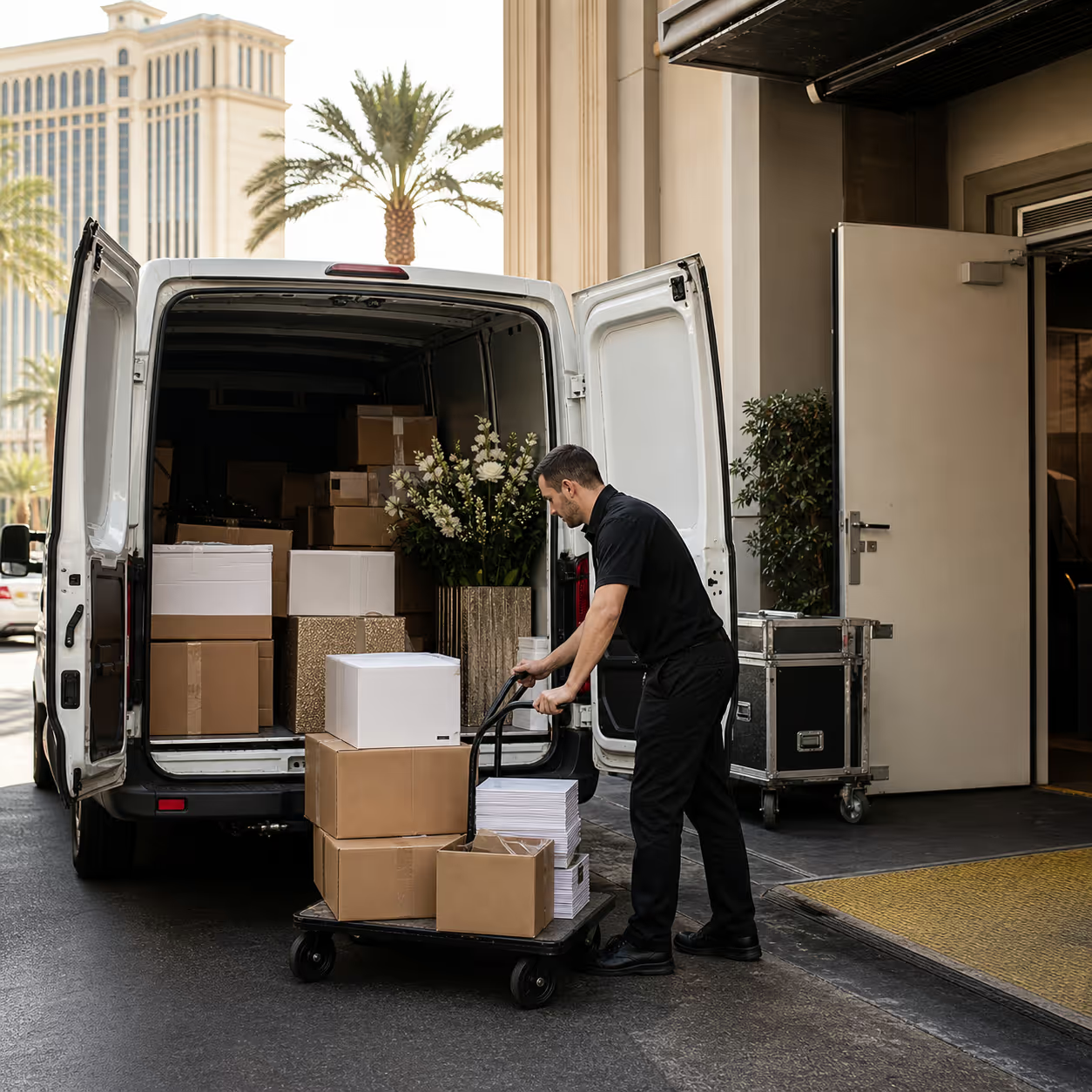
A cargo van can hold up to 200 cubic feet of cargo, carry more than 2,100 pounds, and fit two standard pallets side by side. Items up to 50 inches wide, 50 inches tall, and 138 inches long can fit. That covers a significant range of business deliveries that most people assume need a truck.
Fits a courier
2 standard pallets, 170 apparel boxes, 20 large medical coolers, auto parts on a pallet, convention booth panels, large screen TVs
Needs freight
Full truckloads, oversized industrial equipment, loads requiring a forklift or loading dock, multi-pallet shipments beyond cargo van capacity
If you are unsure whether your item fits, send the dimensions, weight, and a photo. That is faster than guessing and avoids booking the wrong service entirely.
Most businesses do not need freight for their local deliveries. They need speed and reliability. Here is where a courier consistently outperforms a freight carrier for Las Vegas area businesses.
Time is the real cost
If your shop is waiting on a part, your team is waiting on a document, or your booth setup starts in three hours, freight cannot help. A freight carrier's timeline does not bend for your deadline. A same-day courier is built around it.
No terminal delays
Freight moves through sorting hubs. That means scan delays, misroutes, and delivery windows measured in days. A courier goes direct. Pickup to delivery with no intermediate stops and no sorting network in between.
You can actually reach someone
Freight tracking tells you where a shipment was scanned last. A courier can tell you where the driver is right now and when to expect arrival. For sensitive deliveries, that direct communication has real value.
Local knowledge matters
A freight carrier knows the highway between terminals. A local courier knows which entrance to use at the Venetian, which receiving dock takes walk-in deliveries at the convention center, and how to navigate Henderson business parks without wasting time. That knowledge speeds up every delivery.
Courier service is not the right tool for every job. There are situations where freight is genuinely the better choice and it is worth being direct about that.
Use freight when: the load exceeds cargo van capacity, the destination is out of state, the timeline is flexible, the item needs a forklift or loading dock to move, or the volume makes per-job courier pricing impractical. Freight infrastructure exists for a reason. Use it when the job actually calls for it.
Is courier service more expensive than freight?
For small local deliveries, a courier is often comparable to or cheaper than freight once you factor in terminal fees, accessorial charges, and fuel surcharges that freight carriers add. For large volume or long-distance loads, freight wins on cost per pound. The right question is not which is cheaper overall but which one solves the actual problem.
Can a courier deliver pallets in Las Vegas?
Yes. A cargo van fits up to two standard 48 by 40 inch pallets. For businesses moving pallet quantities locally without needing a freight terminal, a courier is often the faster and more direct option. Send the pallet dimensions and weight for a quote.
What if my item is large but I still need it today?
Send the dimensions, weight, and a photo. If it fits within cargo van capacity, a same-day courier can handle it. If it exceeds the limits, that will be confirmed upfront so you can explore freight options without wasting time.
Does Haulnado handle freight?
Haulnado is a local courier service, not a freight carrier. Jobs that fit within cargo van capacity and are headed somewhere in the Las Vegas, Henderson, or Boulder City area are the right fit. Jobs that require freight infrastructure are outside that scope and will be communicated clearly before anyone is dispatched.
Can a courier handle B2B deliveries, not just individual packages?
Yes. Most of the courier work in Las Vegas is B2B. Auto shops, law offices, medical practices, warehouses, hotels, and convention teams all use same-day courier service for deliveries that need to happen today. See the business courier service page for recurring and B2B options.
Not sure which service you need?
Send the details and we will tell you straight.
Item description, size, pickup and delivery locations, and timing. No dispatch until you approve pricing.
Start Courier Quote View Same-Day Courier ServiceFor more on how same-day courier service works, see the same-day courier guide. For pricing details, visit the pricing page.
The Haulnado team


.svg)